Ant Pest Solutions Big Lake
You need licensed Big Lake ant control that recognizes Camponotus, Tapinoma, Tetramorium, Lasius, and Formica by structural features, tracks pheromone trails, and identifies moisture hotspots. Experts should adhere to Minnesota/EPA labels, implement targeted non-repellent baits (carbohydrate-based for odorous ants, protein and oil for pavement ants), and prevent blanket sprays that lead to budding. Look for humidity and slab-joint inspections, accurate monitoring, exclusion sealing, and detailed products, lots, and reentry intervals. Choose providers certified in MDA's database. Read on for signs, methods, and contractor screening.
Main Highlights
- Choose licensed and bonded providers knowledgeable about Big Lake pest varieties (Camponotus, Tetramorium, Tapinoma, Lasius) and follow state and federal requirements.
- Request information on inspection procedures: species identification, pathway documentation, moisture assessment, and calibrated monitoring with documented reinspection schedules.
- Verify integrated pest management methods: sanitation, exclusion, species-specific baits and eco-friendly non-repellent treatments; refrain from widespread perimeter applications.
- Demand data-backed outcomes: bait station monitoring, location mapping, modification threshold levels, and detailed placement/lot-number documentation.
- Confirm safety measures for children and pets: utilizing secure bait containers, low-emission gels, appropriate reentry timeframes, and prevention of resistance via rotating pest control substances.
Identifying Ant Problems in Big Lake
Look for early warning signs to avoid a bigger ant colony. You'll observe distinct trails across baseboards or countertops as worker ants follow pheromone routes to food. Check garbage bins for ant activity; frequent sightings suggests a nearby nest. Look for fine, gritty "frass" or displaced soil beside slab cracks, window frames, or porch edges-evidence of digging. Notice soft rustling noises in walls during warm periods. Investigate under sinks and behind appliances for damp-seeking species. Outside, trace ants along foundations, tree bases, and expansion joints.
Record temporal patterns and data; periodic increases point to protein or sugar recruitment. Capture images of specimens for identification to family (Formicidae) and subfamily indicators. When considering management, adhere to Minnesota pesticide labels and IPM best practices: cleaning, barrier methods, specific baits, and approved treatments.
Prevalent Ant Types in Big Lake and Their Invasion Patterns
You'll encounter various ant species in Big Lake-such as Camponotus (carpenter ants), Lasius (moisture ants), and Tetramorium (pavement ants)-each displaying specific traits and behaviors confirmed by area extension data. They infiltrate seeking nourishment, water, and refuge, with intrusion increasing during spring swarming and late-summer water scarcity, which alter their feeding territories into structures. You need to identify the specific ant before treatment and follow Minnesota and EPA label directions to match baits or residuals to their biology and seasonal cycles.
Types of Ants Found in Big Lake
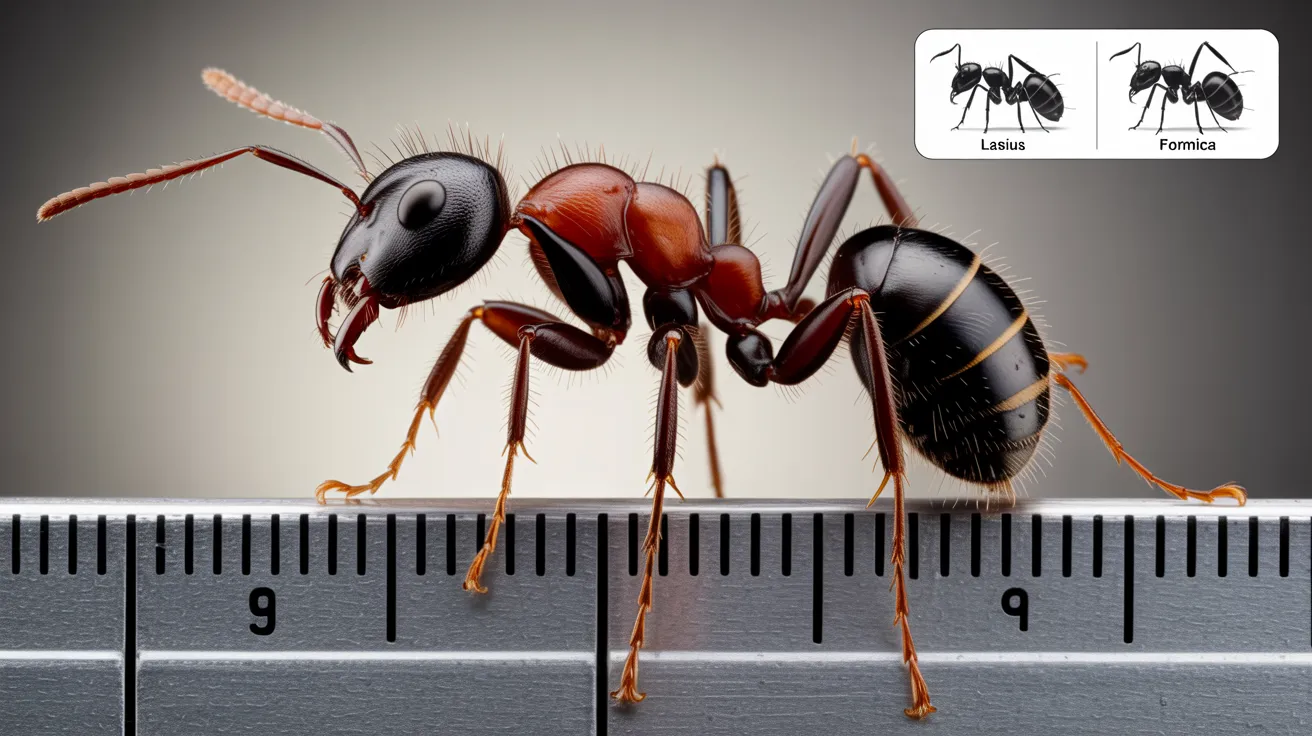
For effective pest control, the primary ant species you'll notice in Big Lake consist of odorous house ants (Tapinoma sessile), pavement ants (Tetramorium immigrans), carpenter ants-specifically Camponotus modoc and C. vicinus-and periodic visitors like field ants (Formica spp.) and thief ants (Solenopsis molesta). You can identify odorous house ants by their unique coconut-like odor when crushed; pavement ants feature grooved head and small crater mounds. You can identify carpenter ants by a single node, evenly rounded thorax, and polymorphic workers; they're the main structural concern. Field ants don't establish indoor nests but range broadly. You'll notice thief ants have their tiny size, pale coloration, two nodes and posterior eyes. Before applying any control measures, confirm identification with university keys and follow Minnesota Department of Agriculture and EPA guidelines.
Understanding Ant Infestations
Throughout the warmer months, Big Lake ants search for nesting locations, water, and food sources, and different species target different gaps in a home's ecology. You'll observe foraging trails emerge when Formica and Lasius workers locate carbohydrate sources; sugary materials lead to increased activity to food residue, animal feed, and insect secretions. Carpenter ants (Camponotus) target damp structural wood; high moisture levels and water damage align with their nesting preferences. Pavement ants (Tetramorium immigrans) access via slab cracks to harvest proteins and seeds. Odorous house ants (Tapinoma sessile) make their homes in garden debris or structural gaps, relocating nests when humidity rises. Following label directions and Minnesota structural pest regulations, you should recognize specific varieties, fix underlying issues, and select appropriate baits based on feeding habits and colony organization.
Pest Activity Throughout the Seasons
Common pest infestations in Big Lake typically follow predictable seasonal patterns: Camponotus pennsylvanicus (carpenter ants) begin spring foraging after specific degree-day thresholds and target water-damaged wood; odorous house ants (Tapinoma sessile) rapidly expand colonies during early-summer moisture, shifting between mulch areas and wall cavities; Tetramorium immigrans (pavement ants) become active along slab joints from late spring to mid-summer, gathering proteins and seeds; and Lasius and Formica species increase their carbohydrate foraging during peak aphid honeydew production. Spring activity increases as colonies emerge from winter shelter, focus on brood development, and search for moisture and nutrients. Species identification must precede treatment, since incorrect identification results in ineffective baiting. When dealing with carpenter ants, first correct moisture issues. Remove mulch-to-building connections when dealing with odorous house ants. Adhere to Minnesota and EPA regulations for residuals and baiting, use perimeter treatments judiciously, and plan post-rain inspections.
Advanced Inspection and Diagnostic Procedures
A thorough professional inspection precedes any treatment to identify ant species, nesting sites, and contributing factors using proven, scientific methods. Professional technicians carefully record morphological details - such as antennae formation, node patterns, and thoracic features - to classify Formicinae from Myrmicinae and highlight invasive populations. They map ant activity using protein and sugar-based attractants, then verify species identification via microscopic examination and area-specific guides.
During interior assessments, specialists employ humidity mapping to detect moisture gradients that indicate nest sites in structural voids, under-floor areas, and foundation joints. For exterior inspections, professionals carry out perimeter inspections, test soil conditions, and examine structural entry points, recording findings in compliance with state and federal regulations. Specialists analyze sanitation and structural conditions, establish monitoring frequencies, and position non-baited interceptors separate from bait stations to prevent contamination, confirming that assessments inform regulated, precise control strategies.
Effective and Safe, Environmentally Conscious Solutions That Deliver Results
While diagnostics help identify the specific issue, the approach centers on minimum-risk solutions that take advantage of ant biology and adhere to Washington State and EPA label regulations. We must coordinate treatment approaches to specific species: Argentine (Linepithema humile) and odorous house ants (Tapinoma sessile) are effectively controlled by time-release eco-friendly baits with carbohydrate matrices; pavement ants (Tetramorium immigrans) readily accept protein/oil baits; carpenter ants (Camponotus spp.) need non-repellent solutions.
You'll strategically place bait applications following foraging paths and near colony centers, adhering to label rates and preventing broadcast misuse. For direct control, you can utilize botanical treatments containing natural oils like rosemary and clove where labels permit; these disrupt octopamine receptors yet degrade quickly. For structural voids, apply non-repellent microencapsulates or powder treatments in accordance with WSDA rules. You'll rotate active ingredients to minimize bait aversion and log every application detail and schedule.
Keeping Children, Pets, and Vulnerable Areas Safe During Treatment
Once you've aligned baits and non-repellents to different ant varieties, you must strategically implement treatments to safeguard pets, children, and vulnerable zones while preserving treatment potency and following label requirements. Map and identify ant trails by species - such as pavement, odorous house, and carpenter ants - then restrict applications to inaccessible spaces. Choose child-resistant products with taste deterrents, protected application points, and minimal-emission gel products for indoor problem spots. Limit perimeter spraying for outdoor perimeters, making sure to observe designated waiting periods and ventilation guidelines according to label instructions.
Implement pet-friendly timing: provide treats when kids are at school and animals are confined, then check dry time and location security before letting pets return. Guard cribs, feeding areas, aquaria, and medical apparatus; establish exclusion zones as directed by the SDS and EPA label. Document lot numbers, locations, and contact times. Discard residues as per local hazardous-waste rules.
Strategic Prevention and Long-Term Maintenance Solutions
Following successful pest elimination, set up a maintenance schedule that targets the taxa most at risk of reoccurrence and adheres to state guidelines and product specifications. Plan follow-up checks based on pest biology: three-month inspections for Camponotus (carpenter ants), monthly warm-season inspections for Tapinoma sessile (odorous house ants), and spring and fall checks near moisture-prone areas. Maintain records for monitoring locations, where baits are applied, and restricted pesticide usage.
Prioritize habitat modification: remove aphid‑harboring plants, prune branches connecting to siding, fix moisture intrusions, and place firewood above soil. Integrate perimeter sealing with exclusion-screen weep holes, gasket utility penetrations, and repair thresholds to interrupting foraging trails. Employ targeted baits matched to trophic preferences; alternate active ingredients to manage resistance. Adjust exterior residuals to label‑allowed band widths and setbacks in relation to water. Confirm success with bait card counts and trail mapping.
How to Choose a Reputable Big Lake Ant Control Provider
You should confirm licensing, insurance coverage, and industry certifications (like) state pesticide applicator licenses or ESA certification to verify compliance with regulations and professional standards. Select providers with established track record in identifying local ant species found in Big Lake, especially carpenter ants (Camponotus spp.) and pavement ants (Tetramorium immigrans), since accurate species identification affects control success. Ask for EPA registration information, product documentation, and comprehensive pest management strategies that emphasize environmentally conscious, specific treatments with monitoring and resistance management.
Credentials and Licensing Requirements
When selecting any Big Lake ant control service, ensure they possess a current Minnesota Department of Agriculture (MDA) Structural Pest Control license and the technician carries the appropriate Commercial Applicator or Technician certification. You should verify insurance and a written service here record. These credentials ensure legal product use, label compliance, and responsibility.
Inquire which the ant species they specialize to treat, including carpenter ants, Lasius species, pavement ants, and Tapinoma sessile, since correct species recognition drives choice of bait, exclusion techniques, and residual application locations. Verify evidence of professional development; MDA-certified coursework keeps professionals updated on preventing resistance, reduced-risk products, and IPM standards.
Benefits of certification feature structured education in inspection protocols, proper pesticide measurements, post-treatment waiting periods, and environmental protection measures surrounding water sources and streams. Check certification credentials using MDA's public database and ensure provided services with the scope of certification.
Local Expertise: Your Key to Success
While flashy marketing promises might catch your attention, a reliable Big Lake ant control company proves their worth through detailed local understanding of pest varieties, weather cycles, and local rules. You should inquire about their approach to differentiating Tapinoma sessile (odorous house ants), Formica spp., and Camponotus spp. by examining their structure and colony behavior, and when peak activity occurs with Big Lake's unique lake-effect moisture and thaw patterns. Verify their compliance with municipal regulations regarding exterior treatments, buffer zones, and water protection measures, and ensure they comply with Minnesota Department of Agriculture protocols.
Examine their community knowledge: are they mapping trail patterns logged by HOA managers, dock owners, and park crews? Robust community partnership shows they identify common problem areas-shoreline riprap, pine windbreaks, and crawlspaces. Pick teams that track site-specific conditions, utilize local datasets, and adapt monitoring routes across microhabitats.
Reliable, Effective Techniques
As safety and effectiveness are determined by selecting appropriate methods, prioritize Big Lake experts who implement IPM approaches and species-targeted solutions validated by peer-reviewed data. Request information on ant species identification like Lasius neoniger, Tapinoma sessile, or Camponotus pennsylvanicus, as feeding behavior influences treatment timing, bait choice, and location.
Expect an effective plan that organizes structural alterations (such as exclusion, moisture control, and cleaning) before applying chemicals, and implements natural deterrent products only when research supports their use. Verify they utilize reduced-risk baits with time-release toxicants for colony transfer, instead of broad-spectrum sprays that trigger colony budding in odorous house ants.
Verify regulatory compliance including labels, Minnesota licensing, and EPA/WSDA registrations. Request documentation of key components, warning labels, pest categories, and inspection schedules. Demand monitoring schedules and treatment adjustment triggers, instead of regular broad-spectrum applications.
Questions & Answers
How Much Does Ant Control Usually Cost in Big Lake
The cost of ant control in Big Lake varies between $150-$450 for regular pest control, with typical costs running around $250-$350 per visit. Treatment costs vary by species-carpenter ant elimination commands higher prices due to wood damage concerns and additional treatment requirements. Comprehensive treatment strategies and strategic bait placement maximize results while complying with Minnesota pesticide requirements. Don't forget to ask about seasonal discounts, treatment warranties, and follow-up schedules. Long-term service programs and exterior barrier treatments can decrease long-term spending and prevent future ant problems.
How Quickly Can Service Be Booked and Delivered?
Working with exceptional efficiency, you can typically schedule service with same-day availability, and our specialists usually finish the work within 60-120 minutes at the site. After confirming ant taxonomy (either Formicinae or Myrmicinae) through detailed assessment, they utilize EPA-registered pest control products following regulatory requirements and label directions. You'll experience quick improvement that very day; total colony control typically occurs within one to two weeks, with subsequent treatments arranged based on product safety guidelines and warranty conditions.
Are Guarantees and Additional Visits Included
Yes. You are provided with a satisfaction guarantee based on measurable metrics (no active ant trails, reduced foraging). If pest activity remains within the warranty window, we offer free follow up visits, addressing the identified species (e.g., Formicinae vs. Myrmicinae) with mode-of-action adjustments. We document bait consumption and colony behavior, then apply follow-up treatment per label instructions and state protocols. You'll receive documented findings, product SDS references, and recommendations to stop reinfestation under the same warranty.
Do You Offer Emergency and Same-Day Ant Control Services?
We offer emergency and same-day ant control services with immediate attention for urgent infestations. Upon finding a trail of odorous house ants invading your home, we respond promptly to identify the specific species (like Tapinoma sessile and Camponotus spp.) and apply appropriate control measures. Our team adheres to EPA-registered labels, Minnesota regulations, and IPM protocols, while documenting infestation levels and closing off entry points. We provide a detailed service report, scheduled follow-up inspections, and protection strategies.
How Does Treatment Influence Insurance and HOA Guidelines?
Professional ant control services typically won't affect HOA compliance or insurance policies as long as you follow policy guidelines. Remember to examine your policy terms for limitations and restrictions. Insurers typically mandate professional services with registered pesticides and detailed service records. Homeowner associations usually require approved service providers, application schedules, and access requirements. Maintain documentation of billing records, pesticide documentation, and material safety information. If repairs are needed, secure required permissions and validate service provider certifications to maintain compliance.
Concluding Remarks
You've discovered how to spot ant problems, recognize common types including Odorous House Ants (Tapinoma sessile) and Carpenter Ants (Camponotus spp.), and perform inspections that conform to IPM best practices. Why take chances when eco-friendly baits, precise non-repellents, and exclusion techniques meet state and EPA regulations? You can protect little ones, pets, and sensitive areas by complying with label guidelines, re-entry intervals, and PPE guidance. Pick a certified, insured Big Lake professional, confirm product labels, and schedule preventive monitoring to keep ants away long-term.